Build Ecommerce customer support agent
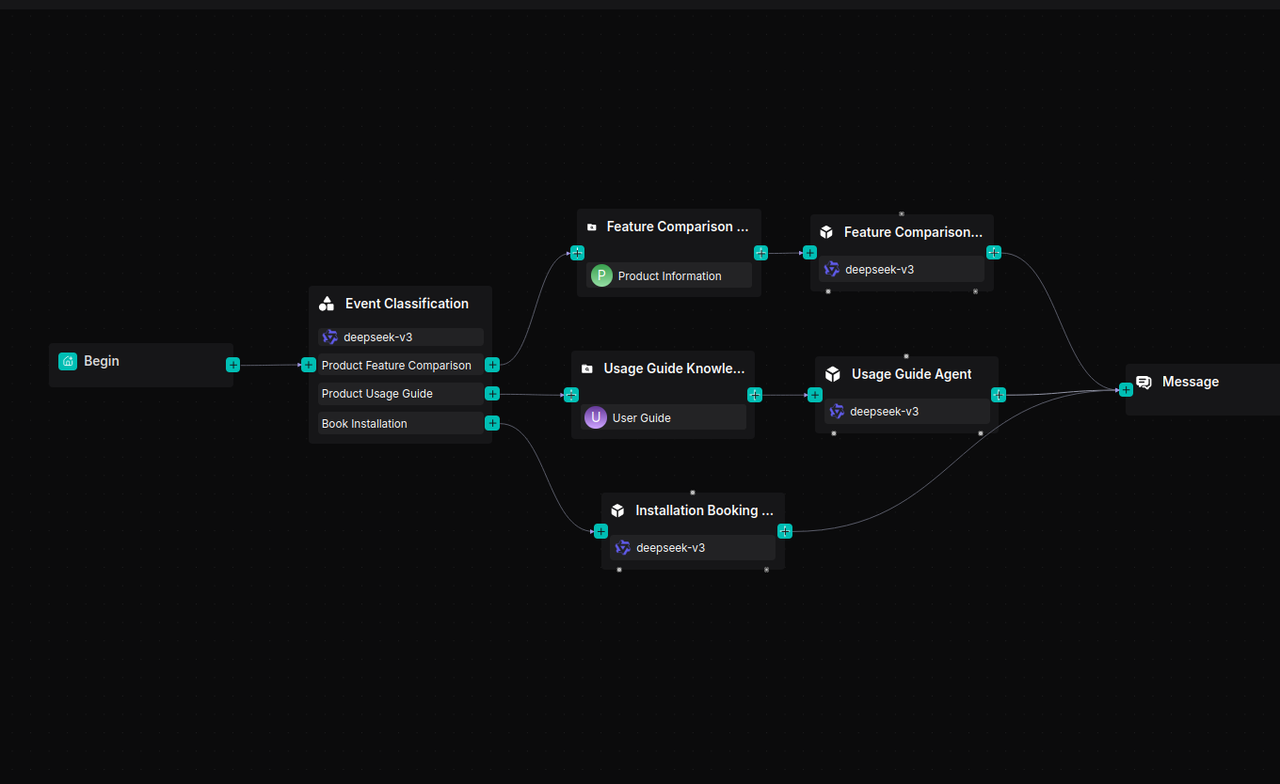
This quickstart guides you through building an intelligent e‑commerce customer support agent. The agent uses RAGFlow’s workflow and Agent framework to automatically handle common customer requests such as product comparisons, usage instructions, and installation bookings—providing fast, accurate, and context-aware responses. In the following sections, we will walk you through the process of building an Ecommerce customer support Agent as shown below:
Prerequisites
- Sample datasets (available from Hugging Face).
Procedures
Prepare datasets
- Ensure that the above-mentioned sample datasets are downloaded.
- Create two datasets:
- Product Information
- User Guide
- Upload the corresponding documents to each dataset.
- On the configurations page of both datasets, choose Manual as chunking method. RAGFlow preserves content integrity by splitting documents at the “smallest heading” level, keeping text and related graphics together.
Create an Agent app
-
Navigate to the Agent page, create an Agent app to enter the Agent canvas. A Begin component will appear on the canvas.
-
Configure a greeting message in the Begin component, for example:
Hi! What can I do for you?
Add Categorize component
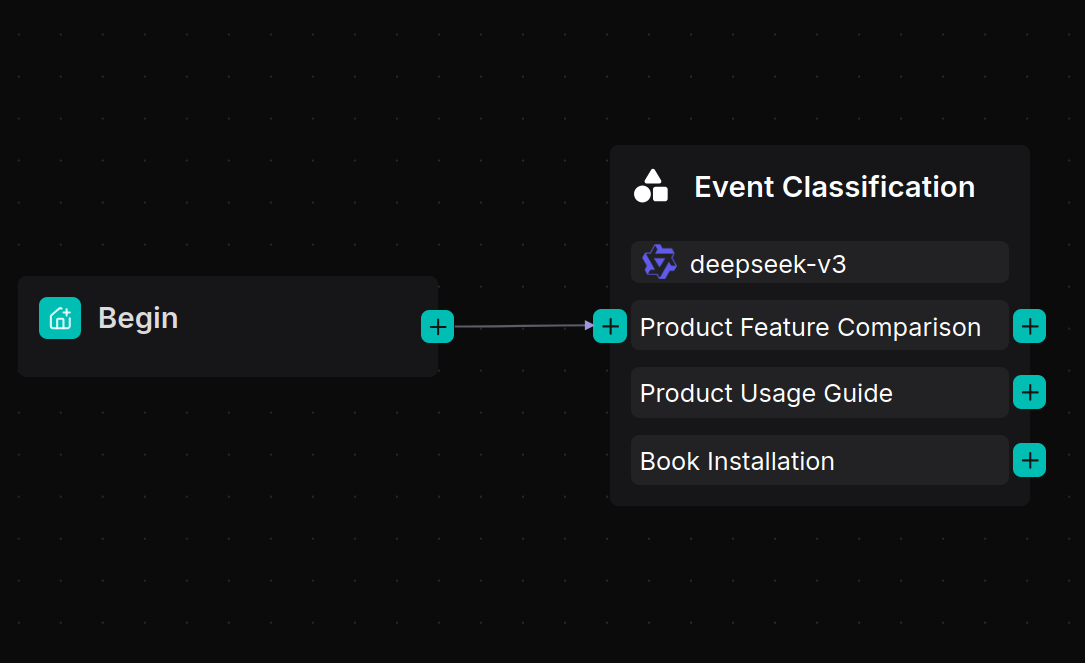
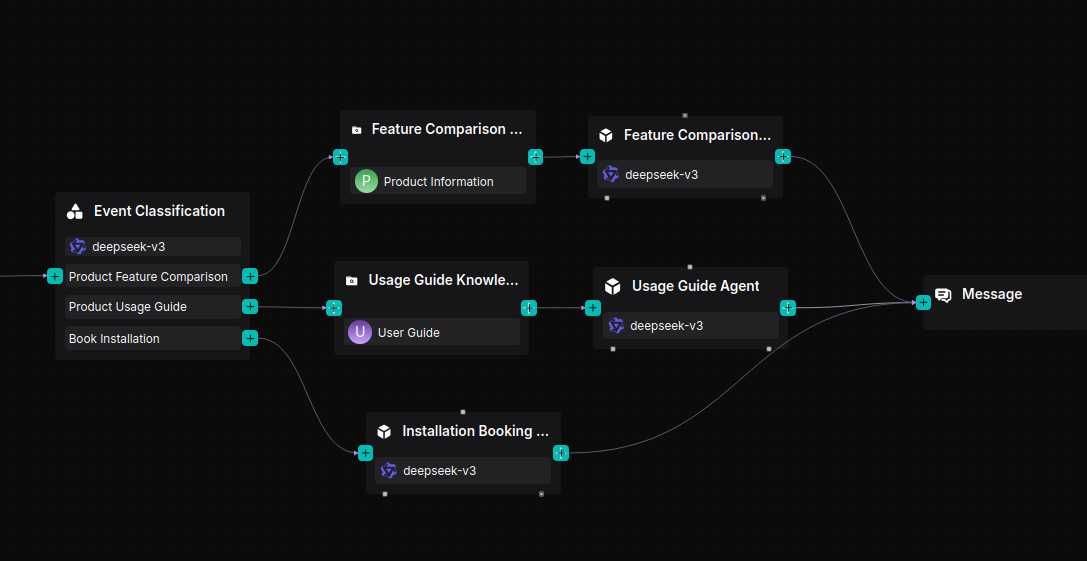
This Categorize component uses an LLM to recognize user intent and route the conversation to the correct workflow.
Build a product feature comparison workflow
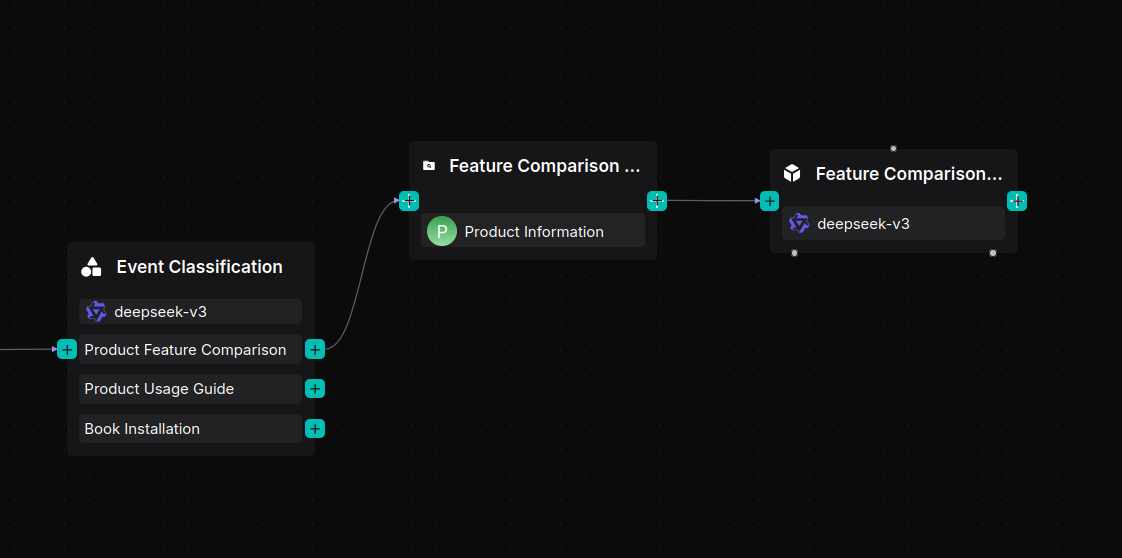
- Add a Retrieval component named “Feature Comparison Knowledge Base" and connect it to the “Product Information” dataset.
- Add an Agent component named “Feature Comparison Agent” after the Retrieval component.
- Configure the Agent’s System Prompt:
You are a product specification comparison assistant. Help the user compare products by confirming the models and presenting differences clearly in a structured format. - Configure the User Prompt:
User's query is /(Begin Input) sys.query
Schema is /(Feature Comparison Knowledge Base) formalized_content
Build a product user guide workflow
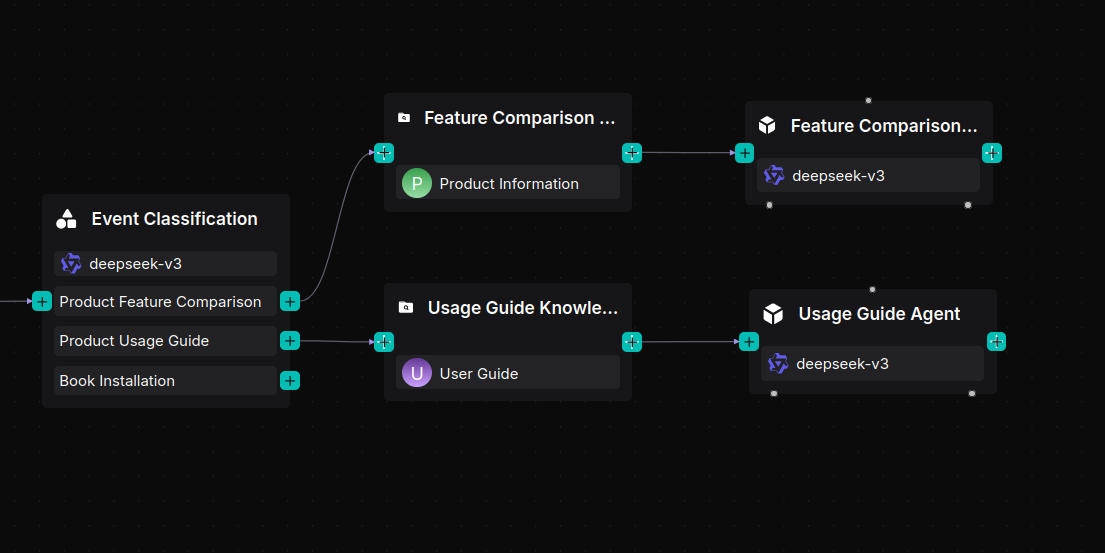
- Add a Retrieval component named “Usage Guide Knowledge Base” and link it to the “User Guide” dataset.
- Add an Agent component named “Usage Guide Agent.”
- Set its System Prompt:
You are a product usage guide assistant. Provide step‑by‑step instructions for setup, operation, and troubleshooting. - Set the User Prompt:
User's query is /(Begin Input) sys.query
Schema is /(Usage Guide Knowledge Base) formalized_content
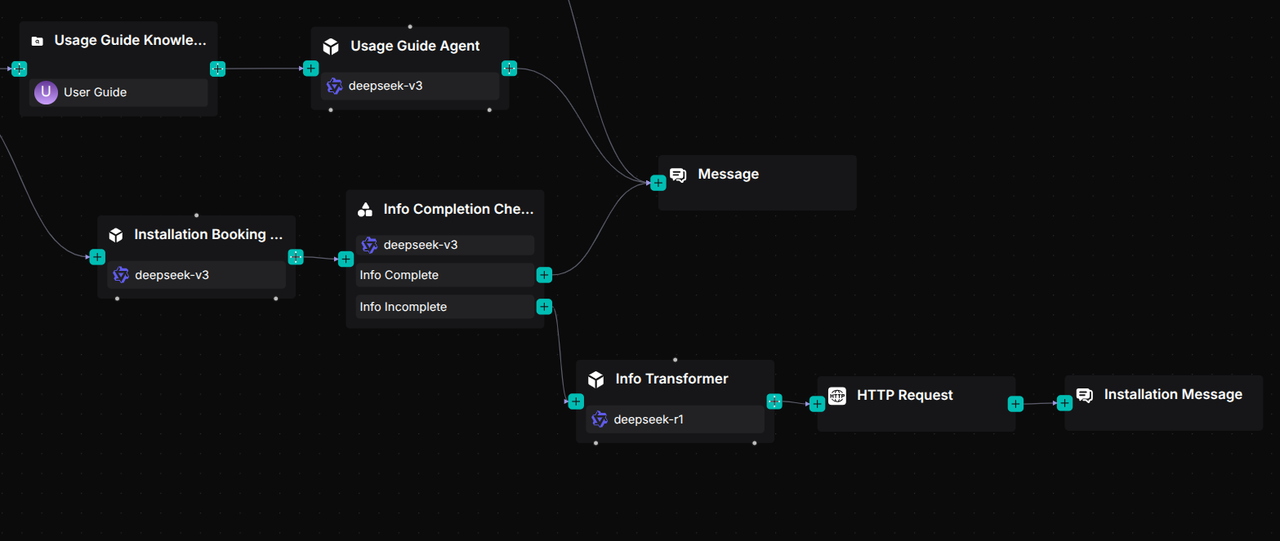
Build an installation booking assistant
-
Add an Agent component named “Installation Booking Agent.”
-
Configure its System Prompt to collect three details:
- Contact number
- Preferred installation time
- Installation address
Once all three are collected, the agent should confirm them and notify the user that a technician will call.
-
Set the User Prompt:
User's query is /(Begin Input) sys.query -
Connect a Message component after the three Agent branches. This component displays the final response to the user.
-
Click Save → Run to view execution results and verify that each query is correctly routed and answered.
-
You can test the workflow by asking:
- Product comparison questions
- Usage guidance questions
- Installation booking requests